Friday, April 28, 2017

Arches of Spring


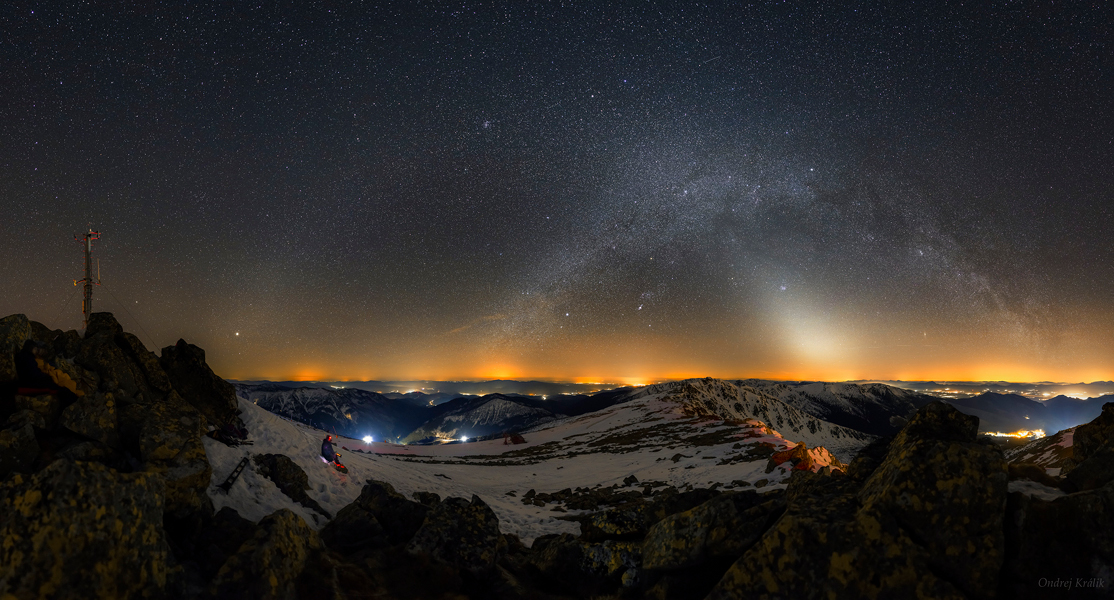
Two luminous arches stretched across the dome of the sky on this northern spring night. After sunset on March 29, the mountain view panorama was captured in 57 exposures from Chopok peak in central Slovakia at an altitude of about 2,000 meters. The arc of the northern Milky Way is visible toward the right, but only after it reaches above the terrestrial lights from the mountain top perspective. Though dusk has passed, a bright patch of celestial light still hovers near the horizon and fades into a second luminous arch of Zodiacal Light, crossing near the center of the Milky Way. Dust in the ecliptic plane reflects sunlight to create the Zodiacal glow, typically prominent after sunset in clear, dark, skies of the northern spring. Almost opposite the Sun, Jupiter shines brightly near the horizon toward the left. Since Jupiter lies near the ecliptic, it appears within the slight brightening of the Zodiacal band also opposite the Sun called the Gegenschein. via NASA http://ift.tt/2pG0XTC

Thursday, April 27, 2017

Exploring the Antennae


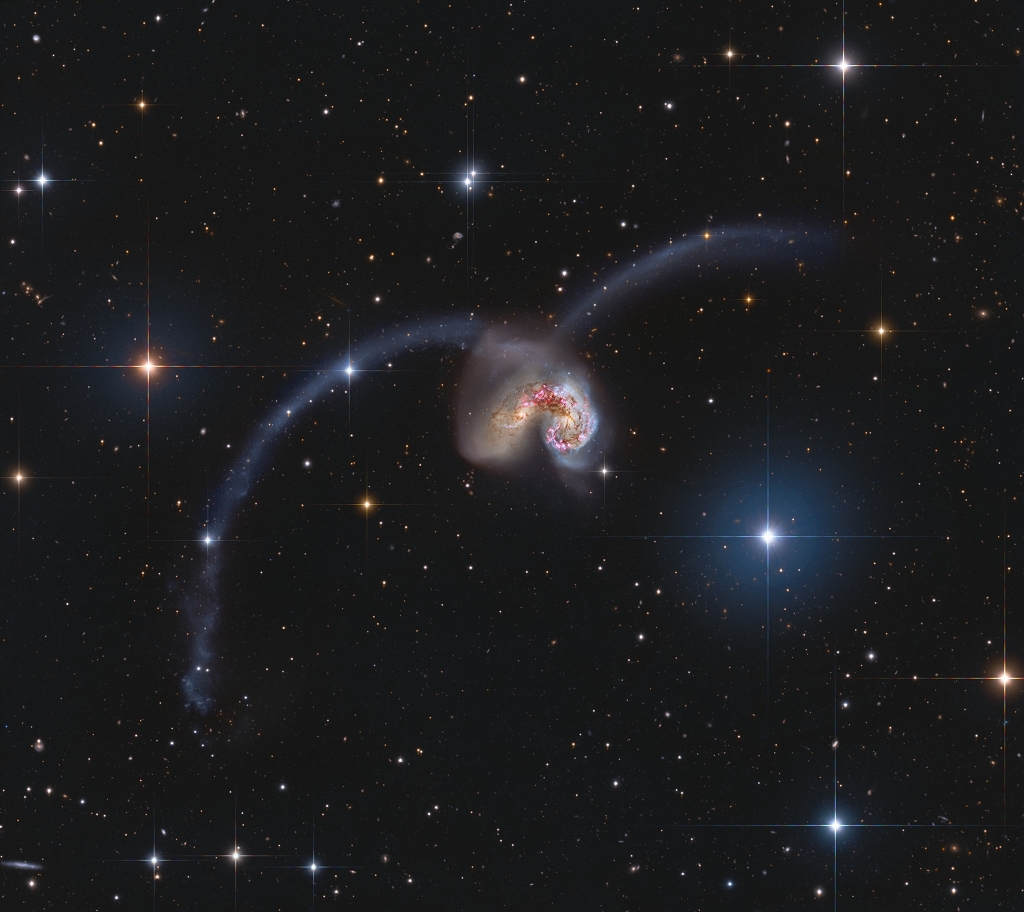
Some 60 million light-years away in the southerly constellation Corvus, two large galaxies are colliding. Stars in the two galaxies, cataloged as NGC 4038 and NGC 4039, very rarely collide in the course of the ponderous cataclysm that lasts for hundreds of millions of years. But the galaxies' large clouds of molecular gas and dust often do, triggering furious episodes of star formation near the center of the cosmic wreckage. Spanning over 500 thousand light-years, this stunning view also reveals new star clusters and matter flung far from the scene of the accident by gravitational tidal forces. The remarkable mosaicked image was constructed using data from the ground-based Subaru telescope to bring out large-scale and faint tidal streams, and Hubble Space Telescope data of extreme detail in the bright cores. The suggestive visual appearance of the extended arcing structures gives the galaxy pair its popular name - The Antennae. via NASA http://ift.tt/2pklrho

Wednesday, April 26, 2017

Lyrids in Southern Skies


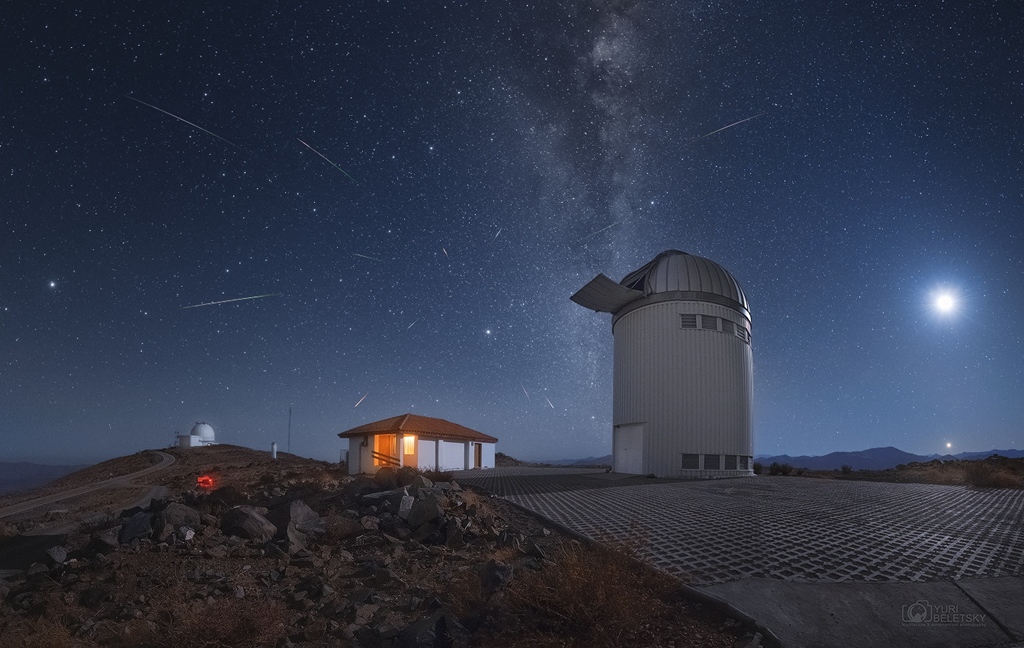
Earth's annual Lyrid meteor shower peaked before dawn on April 22nd, as our fair planet plowed through dust from the tail of long-period comet Thatcher. Seen from the high, dark, and dry Atacama desert a waning crescent Moon and brilliant Venus join Lyrid meteor streaks in this composited view. Captured over 5 hours on the night of April 21/22, the meteors stream away from the shower's radiant, a point not very far on the sky from Vega, alpha star of the constellation Lyra. The radiant effect is due to perspective as the parallel meteor tracks appear to converge in the distance. In the foreground are domes of the Las Campanas Observatory housing (left to right) the 2.5 meter du Pont Telescope and the 1.3 meter Optical Gravitational Lensing Experiment (OGLE) telescope. via NASA http://ift.tt/2p2Mr6N

Tuesday, April 25, 2017

Mt. Etna Lava Plume


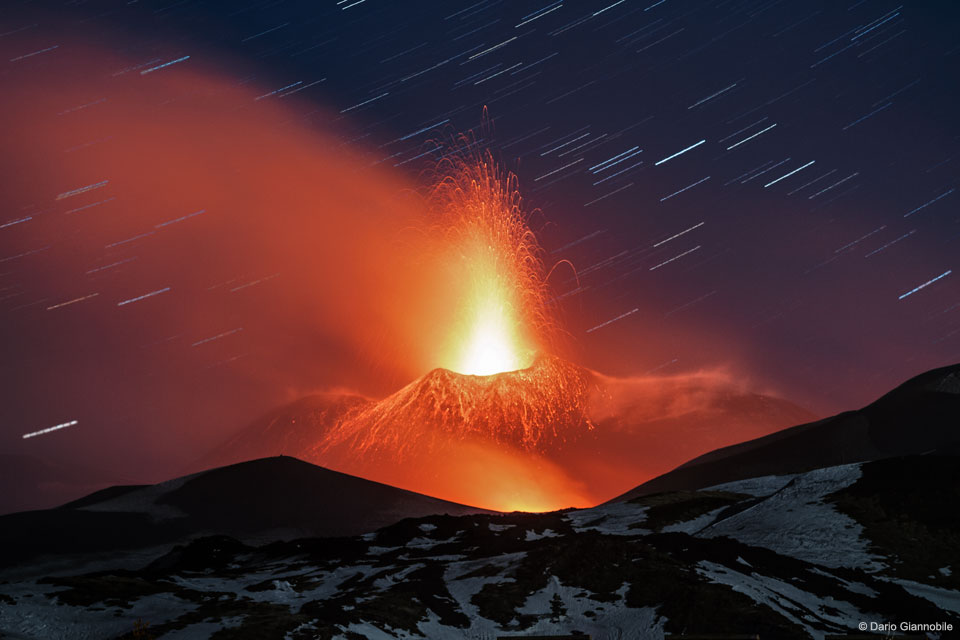
Mt. Etna has been erupting for hundreds of thousands of years. Located in Sicily, Italy, the volcano produces lava fountains over one kilometer high. Mt. Etna is not only one of the most active volcanoes on Earth, it is one of the largest, measuring over 50 kilometers at its base and rising nearly 3 kilometers high. Pictured in mid-March, a spectacular lava plume erupts upwards, dangerous molten volcanic bombs fly off to the sides, while hot lava flows down the volcano's exterior. The Earth's rotation is discernable on this carefully time, moon-lit, long duration image as star trails. via NASA http://ift.tt/2oZGTK0

Monday, April 24, 2017

A Split Ion Tail for Comet Lovejoy E4


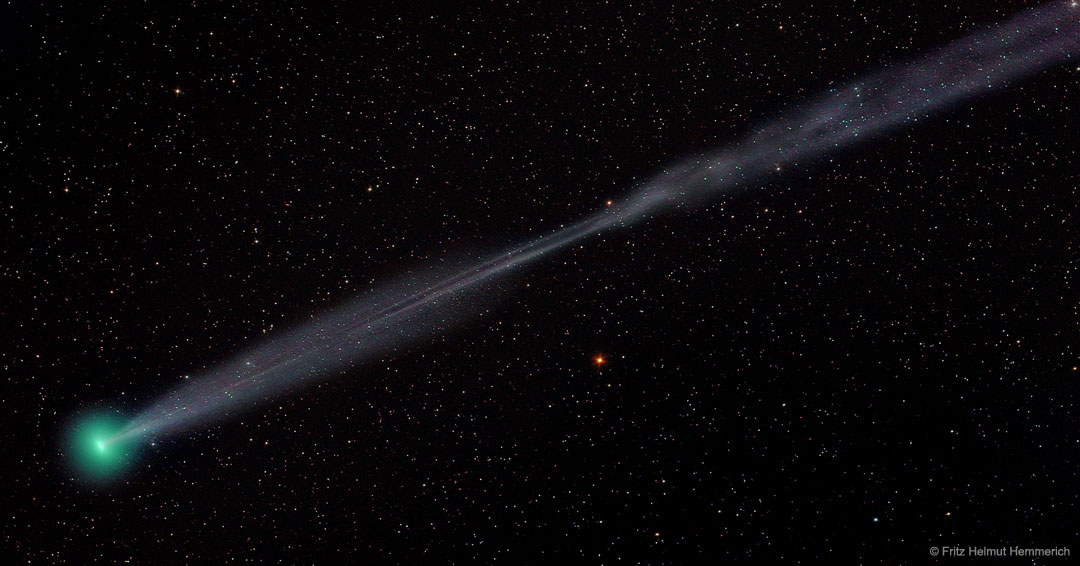
What's happened to Comet Lovejoy? In the pictured image, a processed composite, the comet was captured early this month after brightening unexpectedly and sporting a long and intricate ion tail. Remarkably, the typically complex effect of the Sun's wind and magnetic field here caused the middle of Comet Lovejoy's ion tail to resemble the head of a needle. Comet C/2017 E4 (Lovejoy) was discovered only last month by noted comet discoverer Terry Lovejoy. The comet reached visual magnitude 7 earlier this month, making it a good target for binoculars and long duration exposure cameras. What's happened to Comet Lovejoy (E4) since this image was taken might be considered even more remarkable -- the comet's nucleus appeared to be disintegrating and fading as it neared its closest approach to the Sun two days ago. via NASA http://ift.tt/2p9Ccfd

Wednesday, April 19, 2017

Asteroid 2014 JO25


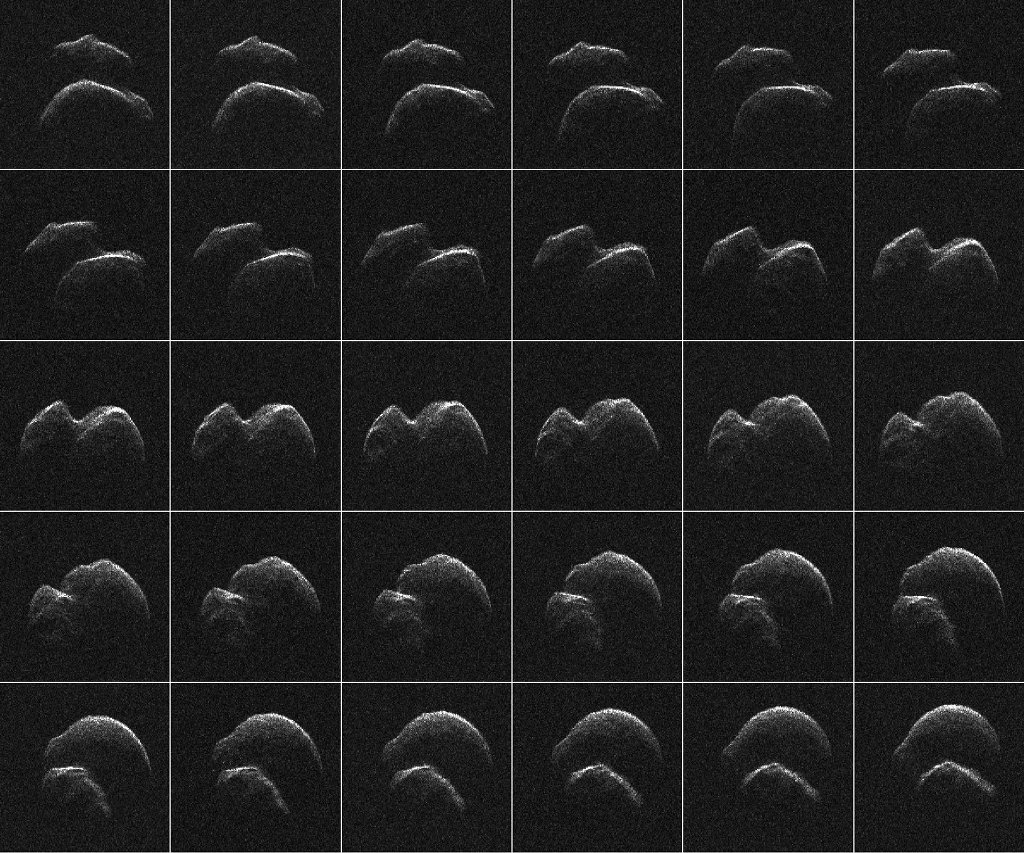
A day before its closest approach, asteroid 2014 JO25 was imaged by radar with the 70-meter antenna of NASA's Goldstone Deep Space Communications Complex in California. This grid of 30 radar images, top left to lower right, reveals the two-lobed shape of the asteroid that rotates about once every five hours. Its largest lobe is about 610 meters across. On the list of Potentially Hazardous Asteroids, this space rock made its close approach to our fair planet on April 19, flying safely past at a distance of 1.8 million kilometers. That's over four times the distance from the Earth to the Moon. The asteroid was a faint and fast moving speck visible in backyard telescopes. Asteroid 2014 JO25 was discovered in May 2014 by the Catalina Sky Survey, a project of NASA's Near-Earth Objects Observations Program in collaboration with the University of Arizona. via NASA http://ift.tt/2oNWfQr

Wednesday, April 12, 2017

Moons and Jupiter


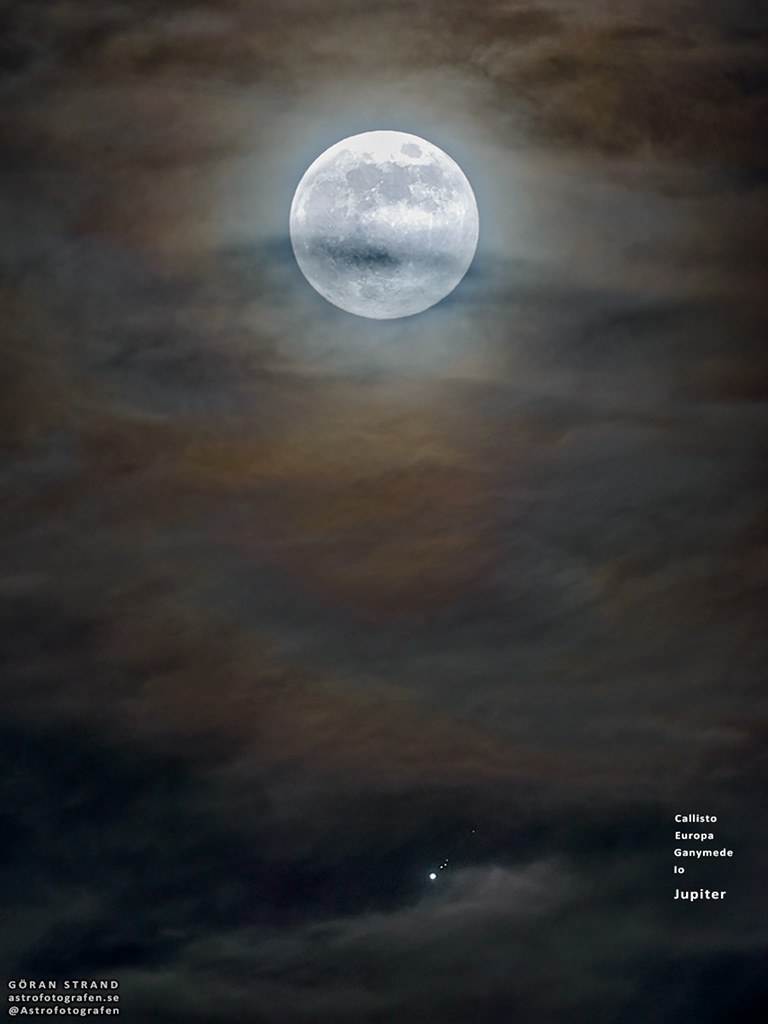
On April 10, a Full Moon and Jupiter shared this telephoto field of view. Both were near opposition, opposite the Sun in Earth's night sky. Captured when a passing cloud bank dimmmed the bright moonlight slightly, the single exposure reveals the familiar face of our fair planet's own large natural satellite, along with a line up of the ruling gas giant's four Galilean moons. Labeled top to bottom, the tiny pinpricks of light above bright Jupiter are Callisto, Europa, Ganymede, and Io. Closer and brighter, our own natural satellite appears to loom large. But Callisto, Ganymede, and Io are physically larger than Earth's Moon, while water world Europa is only slightly smaller. In fact, of the Solar System's six largest planetary satellites, only Saturn's moon Titan is missing from the scene. via NASA http://ift.tt/2prWH5V