Monday, March 6, 2017

Colorful Aurora over Iceland


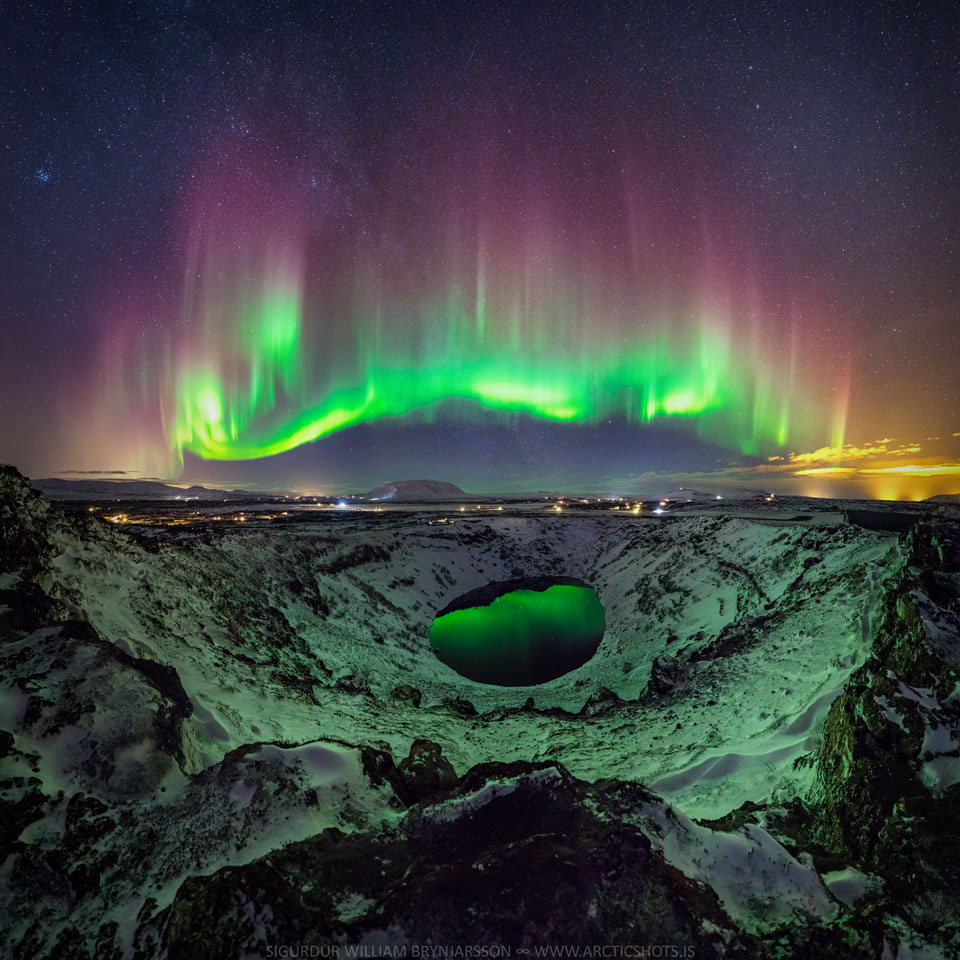
You don't always see a scene this beautiful when you hike to an ancient volcano -- you have to be lucky. When the astrophotographer realized that aurora were visible two-weeks ago, he made a night-time run for the top of the caldera to see if he could capture them also reflected in the central lake. When he arrived, he found that ... the northern lights were even brighter and more impressive than before! And his image of them is the featured 13-frame panoramic mosaic. The crater lake in the center is called Kerid (Icelandic: Keriư) and is about 3,000 years old. The aurora overhead shows impressive colors and banding, with the red colors occurring higher in the Earth's atmosphere than the green. The background sky is filled with icons of the northern night including Polaris, the Pleiades star cluster, and the stars that compose the handle of the Big Dipper. via NASA http://ift.tt/2me9SbC

Thursday, March 2, 2017

Annular Eclipse After Sunrise


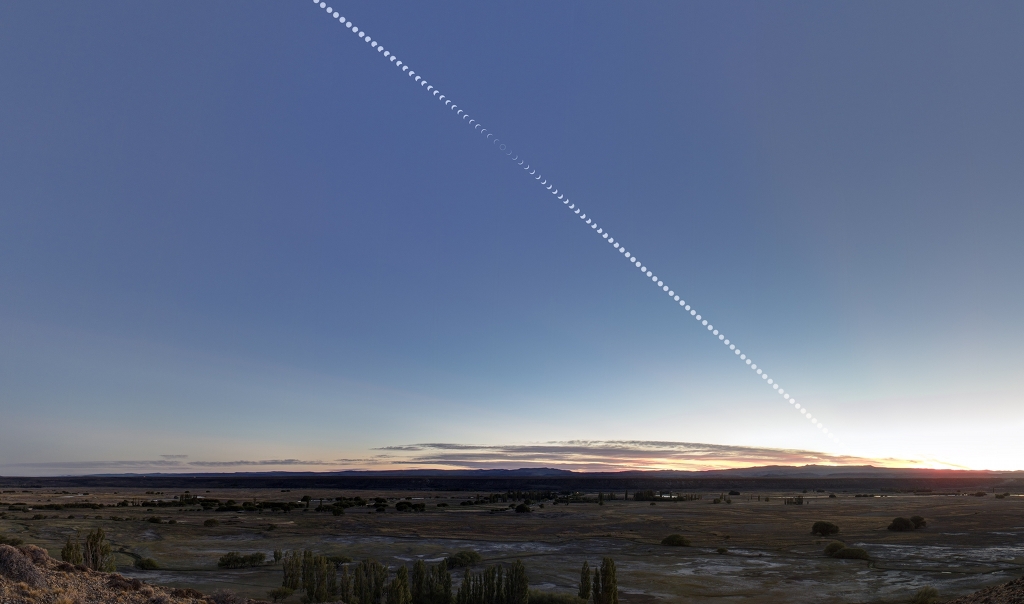
From northern Patagonia, morning skies were clear and blue on Sunday, February 26. This sweeping composite scene, overlooking Hermoso Valle, Facundo, Chubut, Argentina, follows the Sun after sunrise, capturing an annular solar eclipse. Created from a series of exposures at three minute intervals, it shows the year's first solar eclipse beginning well above the distant eastern horizon. An exposure close to mid-eclipse recorded the expected ring of fire, the silhouette of the New Moon only slightly too small to cover the bright Sun. At that location on planet Earth, the annular phase of the eclipse lasted a brief 45 seconds. via NASA http://ift.tt/2lwEkdM

Monday, February 27, 2017

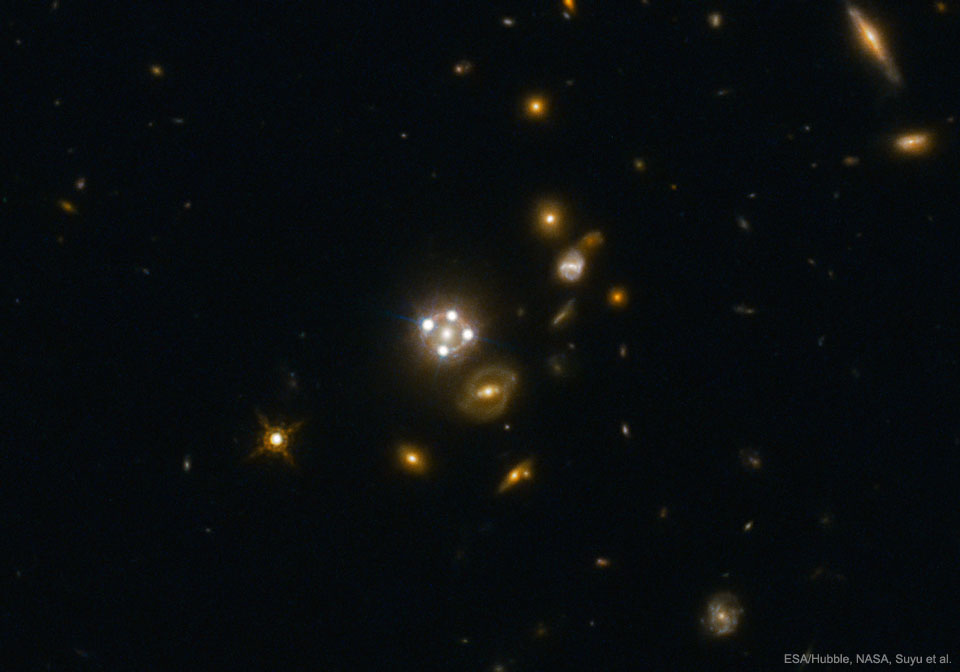
Four Quasar Images Surround a Galaxy Lens


An odd thing about the group of lights near the center is that four of them are the same distant quasar. This is because the foreground galaxy -- in the center of the quasar images and the featured image -- is acting like a choppy gravitational lens. A perhaps even odder thing is that by watching these background quasars flicker, you can estimate the expansion rate of the universe. That is because the flicker timing increases as the expansion rate increases. But to some astronomers, the oddest thing of all is that these multiply imaged quasars indicate a universe that is expanding a bit faster than has been estimated by different methods that apply to the early universe. And that is because ... well, no one is sure why. Reasons might include an unexpected distribution of dark matter, some unexpected effect of gravity, or something completely different. Perhaps future observations and analyses of this and similarly lensed quasar images will remove these oddities. via NASA http://ift.tt/2lqQwNC

Sunday, February 26, 2017

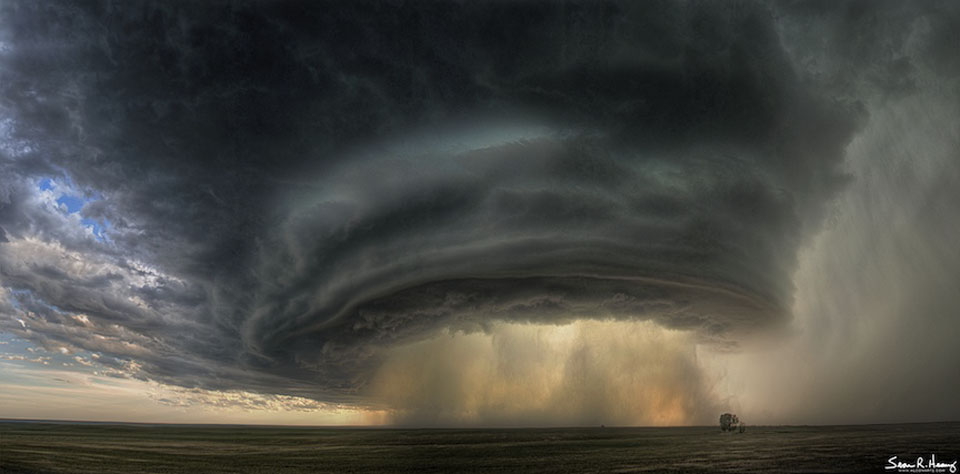
A Supercell Thunderstorm Cloud Over Montana


Is that a spaceship or a cloud? Although it may seem like an alien mothership, it's actually a impressive thunderstorm cloud called a supercell. Such colossal storm systems center on mesocyclones -- rotating updrafts that can span several kilometers and deliver torrential rain and high winds including tornadoes. Jagged sculptured clouds adorn the supercell's edge, while wind swept dust and rain dominate the center. A tree waits patiently in the foreground. The above supercell cloud was photographed in 2010 July west of Glasgow, Montana, USA, caused minor damage, and lasted several hours before moving on. via NASA http://ift.tt/2kZHgUH

Saturday, February 25, 2017

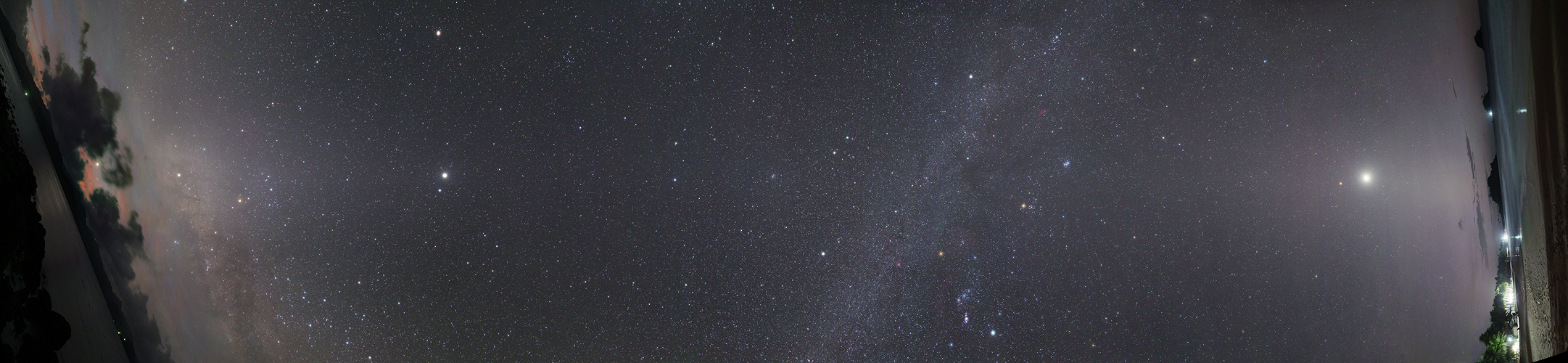
All Planets Panorama


For 360 degrees, a view along the plane of the ecliptic is captured in this remarkable panorama, with seven planets in a starry sky. The mosaic was constructed using images taken during January 24-26, from Nacpan Beach, El Nido in Palawan, Philippines. It covers the eastern horizon (left) in dark early morning hours and the western horizon in evening skies. While the ecliptic runs along the middle traced by a faint band of zodiacal light, the Milky Way also cuts at angles through the frame. Clouds and the Moon join fleeting planet Mercury in the east. Yellowish Saturn, bright star Antares, and Jupiter lie near the ecliptic farther right. Hugging the ecliptic near center are Leo's alpha star Regulus and star cluster M44. The evening planets gathered along the ecliptic above the western horizon, are faint Uranus, ruddy Mars, brilliant Venus, and even fainter Neptune. A well labeled version of the panorama can be viewed by sliding your cursor over the picture, or just following this link. via NASA http://ift.tt/2lGB9lo

Thursday, February 16, 2017

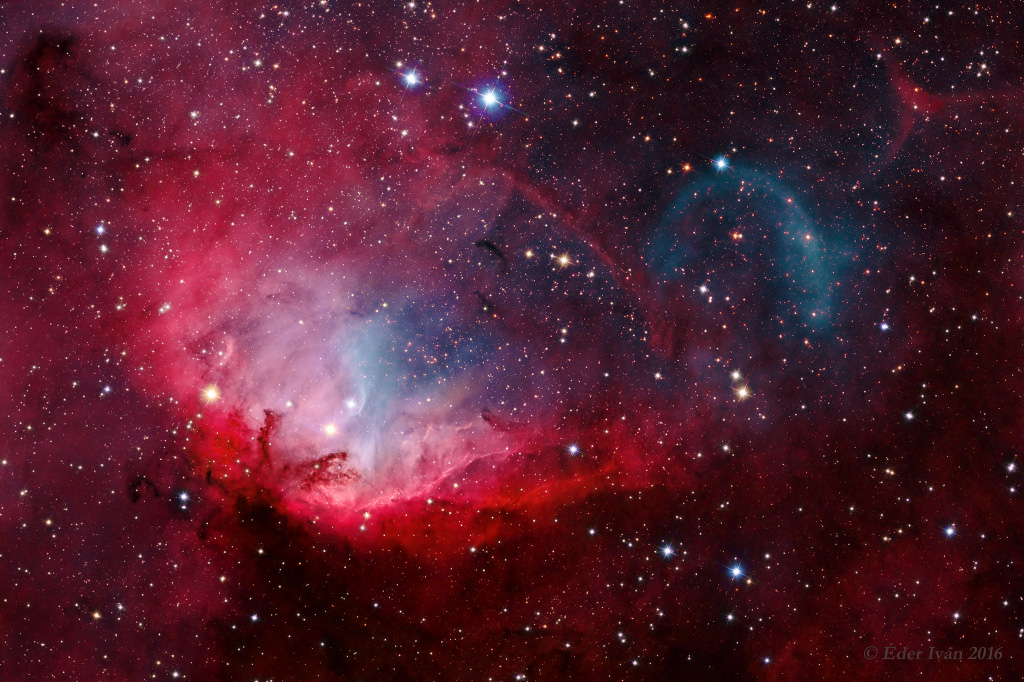
The Tulip and Cygnus X-1


Framing a bright emission region, this telescopic view looks out along the plane of our Milky Way Galaxy toward the nebula rich constellation Cygnus the Swan. Popularly called the Tulip Nebula, the reddish glowing cloud of interstellar gas and dust is also found in the 1959 catalog by astronomer Stewart Sharpless as Sh2-101. About 8,000 light-years distant and 70 light-years across the complex and beautiful nebula blossoms at the center of this composite image. Ultraviolet radiation from young energetic stars at the edge of the Cygnus OB3 association, including O star HDE 227018, ionizes the atoms and powers the emission from the Tulip Nebula. HDE 227018 is the bright star near the center of the nebula. Also framed in the field of view is microquasar Cygnus X-1, one of the strongest X-ray sources in planet Earth's sky. Driven by powerful jets from a black hole accretion disk, its fainter visible curved shock front lies above and right, just beyond the cosmic Tulip's petals via NASA http://ift.tt/2lVUygT

Tuesday, February 14, 2017

The Rosette Nebula


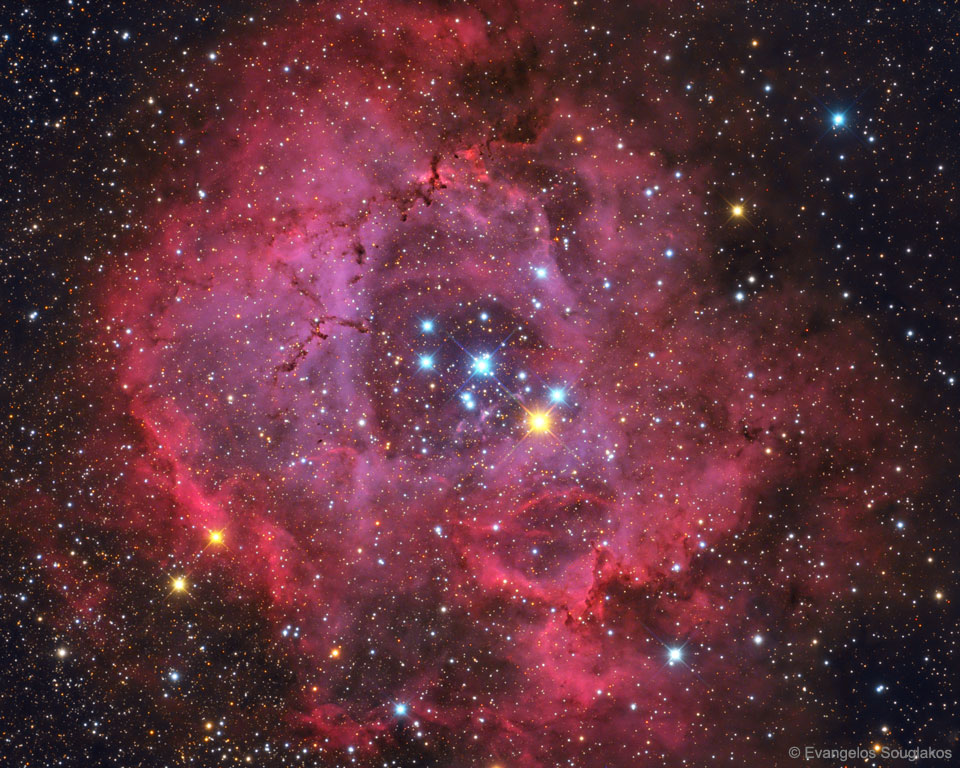
Would the Rosette Nebula by any other name look as sweet? The bland New General Catalog designation of NGC 2237 doesn't appear to diminish the appearance of this flowery emission nebula. Inside the nebula lies an open cluster of bright young stars designated NGC 2244. These stars formed about four million years ago from the nebular material and their stellar winds are clearing a hole in the nebula's center, insulated by a layer of dust and hot gas. Ultraviolet light from the hot cluster stars causes the surrounding nebula to glow. The Rosette Nebula spans about 100 light-years across, lies about 5000 light-years away, and can be seen with a small telescope towards the constellation of the Unicorn (Monoceros). via NASA http://ift.tt/2ksUEf4