Tuesday, February 7, 2017

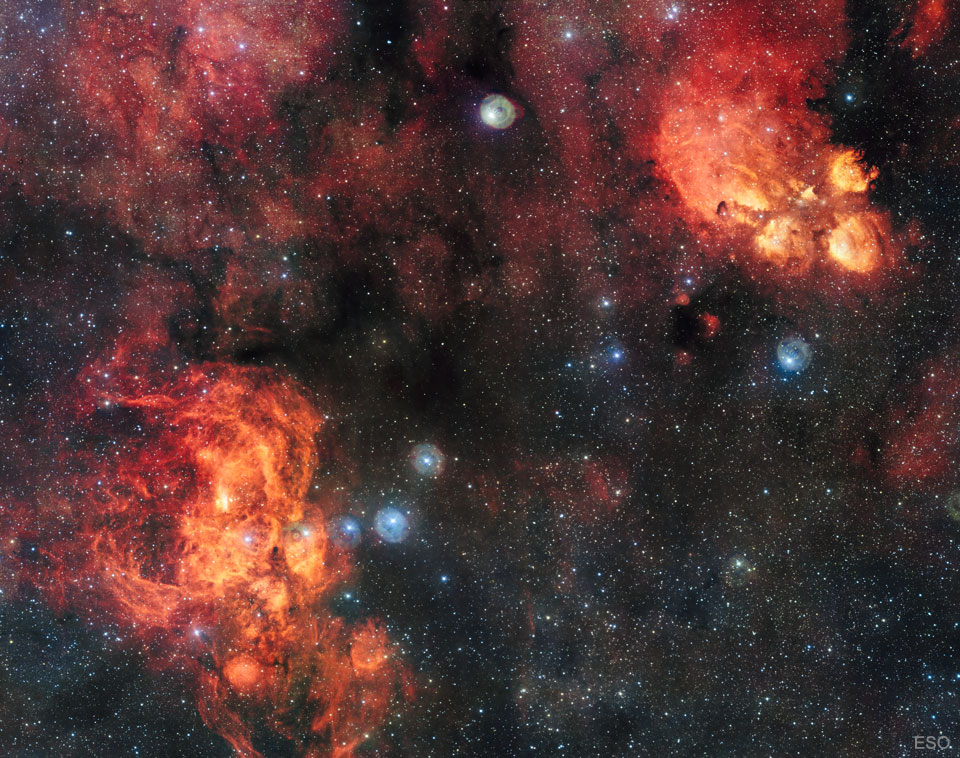
NGC 6357: The Lobster Nebula


Why is the Lobster Nebula forming some of the most massive stars known? No one is yet sure. Near the more obvious Cat's Paw nebula on the upper right, the Lobster Nebula, on the lower left and cataloged as NGC 6357, houses the open star cluster Pismis 24, home to these tremendously bright and blue stars. The overall red glow near the inner star forming region results from the emission of ionized hydrogen gas. The surrounding nebula, featured here, holds a complex tapestry of gas, dark dust, stars still forming, and newly born stars. The intricate patterns are caused by complex interactions between interstellar winds, radiation pressures, magnetic fields, and gravity. The full zoomable version of this image contains about two billion pixels, making it one of the largest space images ever released. NGC 6357 spans about 400 light years and lies about 8,000 light years away toward the constellation of the Scorpion. via NASA http://ift.tt/2kIKlYr

Sunday, February 5, 2017

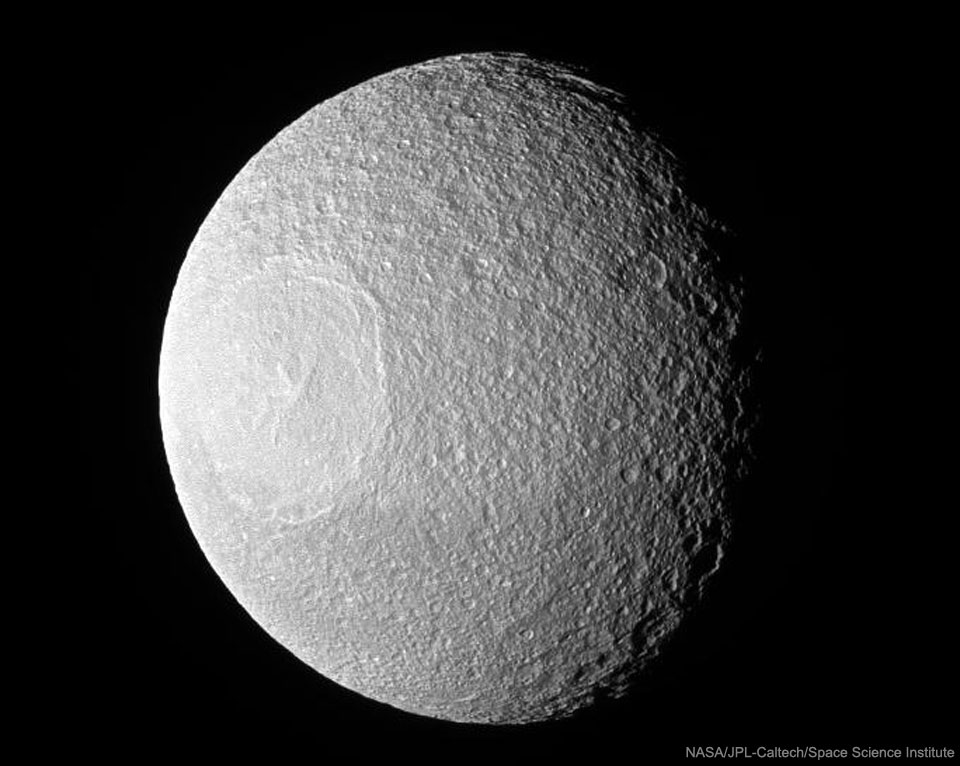
Odysseus Crater on Tethys


Some moons wouldn't survive the collision. Tethys, one of Saturn's larger moons at about 1000 kilometers in diameter, survived the collision, but today exhibits the resulting expansive impact crater Odysseus. Sometimes called the Great Basin, Odysseus occurs on the leading hemisphere of Tethys and shows its great age by the relative amount of smaller craters that occur inside its towering walls. The density of Tethys is similar to water-ice. The featured image was captured in November by the robotic Cassini spacecraft in orbit around Saturn as it swooped past the giant ice ball. Cassini has now started on its Grand Finale Tour which will take it inside Saturn's rings and culminate in September with a dive into Saturn's thick atmosphere. via NASA http://ift.tt/2kGHEGp

Saturday, February 4, 2017

Conjunction of Four


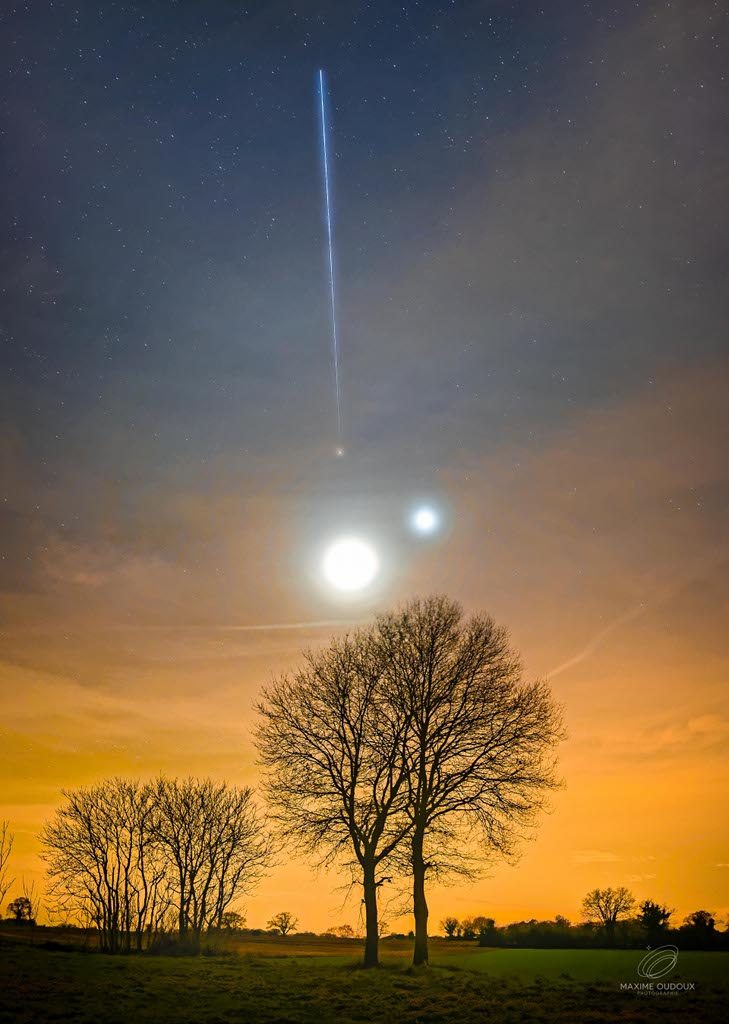
On January 31, a waxing crescent Moon, brilliant Venus, and fainter Mars gathered in the fading twilight, hanging above the western horizon just after sunset on planet Earth. In this combined evening skyscape, the lovely celestial triangle is seen through clouds and haze. Still glinting in sunlight, from low Earth orbit the International Space Station briefly joined the trio that evening in skies near Le Lude, France. The photographer's line-of-sight to the space station was remarkably close to Mars as the initial exposure began. As a result, the station's bright streak seems to leap from the Red Planet, moving toward darker skies at the top of the frame. via NASA http://ift.tt/2l46AbX

Friday, February 3, 2017

Milky Way with Airglow Australis


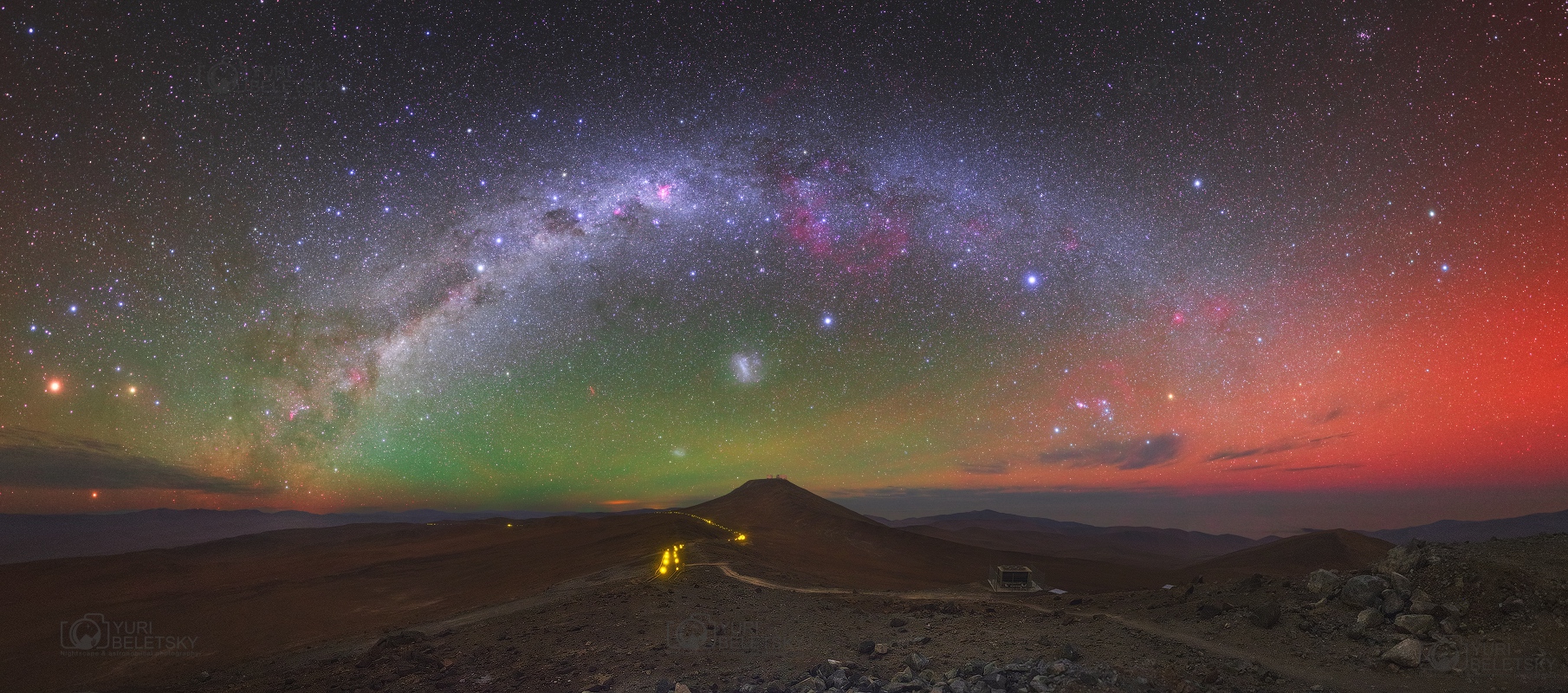
Captured last April after sunset on a Chilean autumn night an exceptionally intense airglow flooded this scene. The panoramic skyscape is also filled with stars, clusters, and nebulae along the southern Milky Way including the Large and Small Magellanic clouds. Originating at an altitude similar to aurorae, the luminous airglow is due to chemiluminescence, the production of light through chemical excitation. Commonly recorded with a greenish tinge by sensitive digital cameras, both red and green airglow emission here is predominately from atmospheric oxygen atoms at extremely low densities and has often been present in southern hemisphere nights during the last few years. Like the Milky Way on that dark night the strong airglow was visible to the eye, but seen without color. Mars, Saturn, and bright star Antares in Scorpius form the celestial triangle anchoring the scene on the left. The road leads toward the 2,600 meter high mountain Cerro Paranal and the European Southern Observatory's Very Large Telescopes. via NASA http://ift.tt/2jKOpmn

Tuesday, January 31, 2017

Where to See the American Eclipse


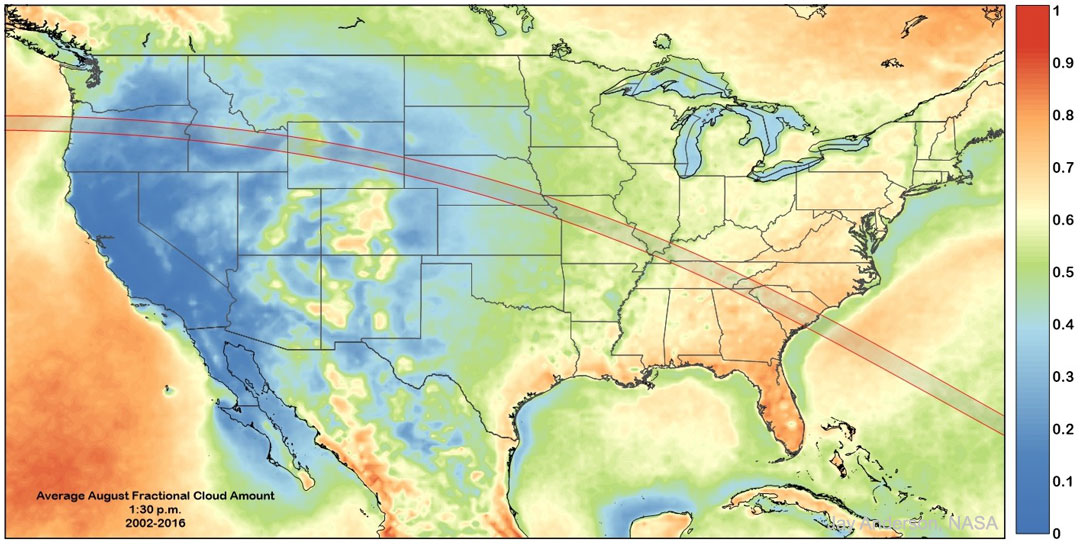
Are you planning to see the American Eclipse on August 21? A few hours after sunrise, a rare total eclipse of the Sun will be visible along a narrow path across the USA. Those only near the path will see a partial eclipse. Although some Americans live right in path of totality, surely many more will be able to get there after a well-planned drive. One problem with eclipses, though, is that clouds sometimes get in the way. To increase your clear-viewing odds, you might consult the featured map and find a convenient destination with a historically low chance (more blue) of thick clouds overhead during totality. Given the large fraction of Americans carrying camera-equipped smartphones, this American Eclipse may turn out to be the most photographed event in the history of the world. via NASA http://ift.tt/2jR3xiW

Monday, January 30, 2017

The Cats Eye Nebula from Hubble


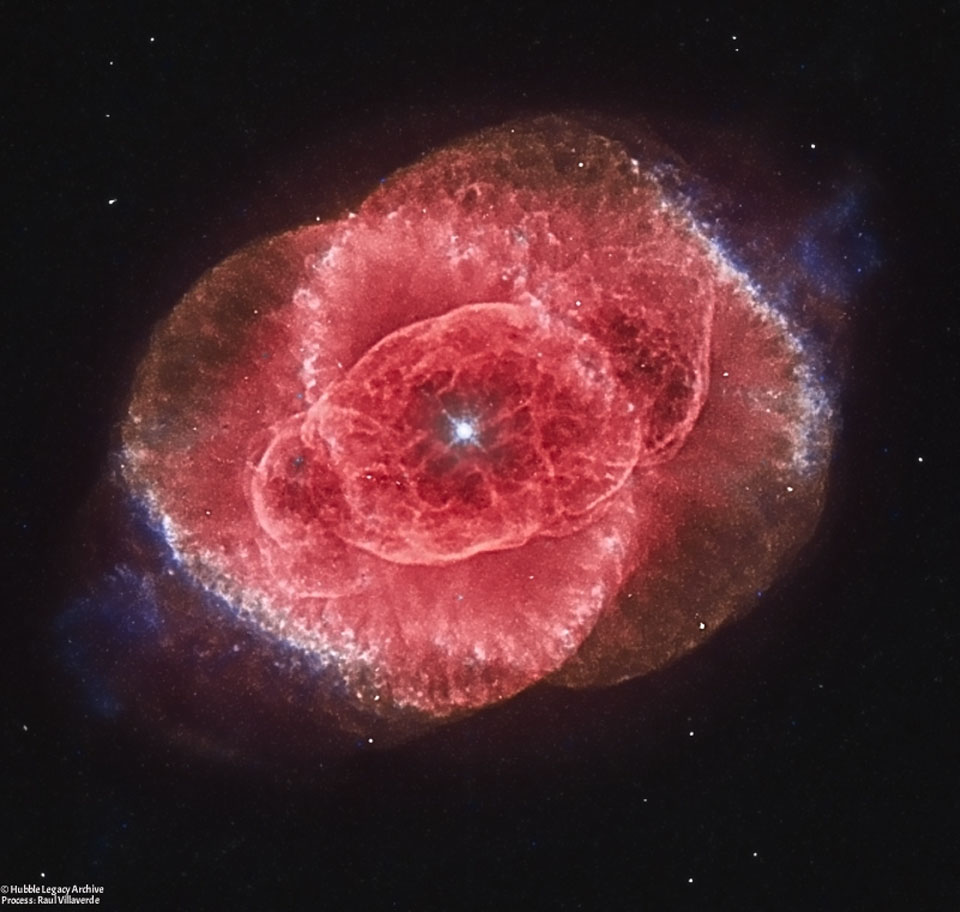
To some, it may look like a cat's eye. The alluring Cat's Eye nebula, however, lies three thousand light-years from Earth across interstellar space. A classic planetary nebula, the Cat's Eye (NGC 6543) represents a final, brief yet glorious phase in the life of a sun-like star. This nebula's dying central star may have produced the simple, outer pattern of dusty concentric shells by shrugging off outer layers in a series of regular convulsions. But the formation of the beautiful, more complex inner structures is not well understood. Seen so clearly in this digitally reprocessed Hubble Space Telescope image, the truly cosmic eye is over half a light-year across. Of course, gazing into this Cat's Eye, astronomers may well be seeing the fate of our sun, destined to enter its own planetary nebula phase of evolution ... in about 5 billion years. via NASA http://ift.tt/2jNBEYX

Tuesday, January 24, 2017

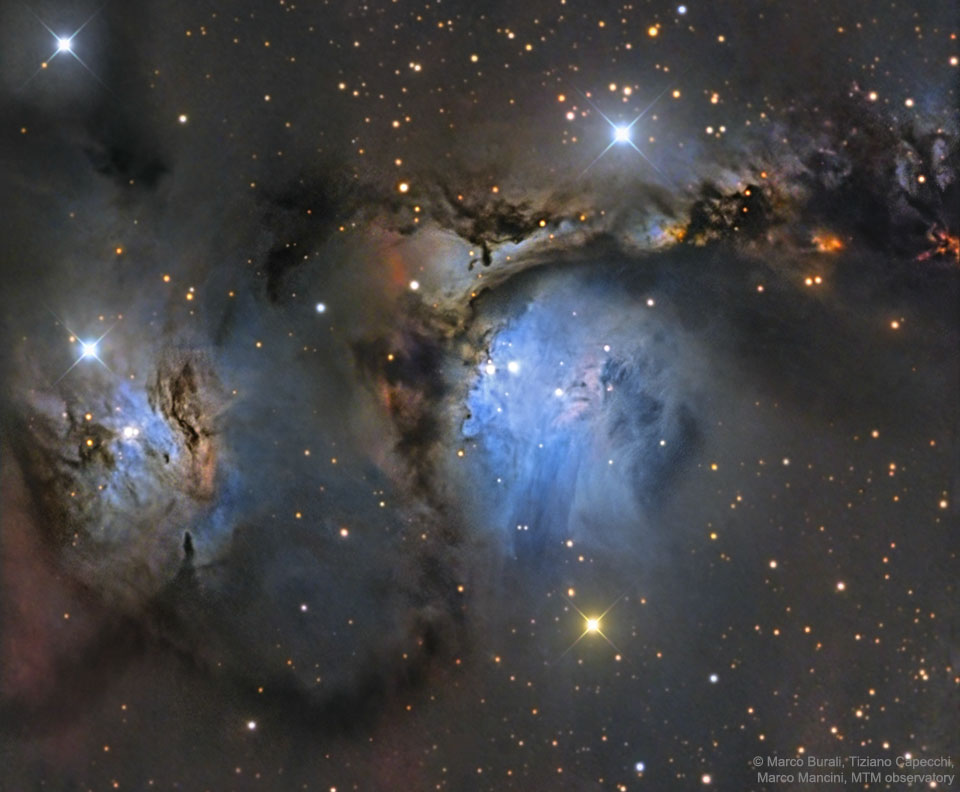
M78 and Orion Dust Reflections


In the vast Orion Molecular Cloud complex, several bright blue nebulas are particularly apparent. Pictured here are two of the most prominent reflection nebulas - dust clouds lit by the reflecting light of bright embedded stars. The more famous nebula is M78, in the image center, cataloged over 200 years ago. To its left is the lesser known NGC 2071. Astronomers continue to study these reflection nebulas to better understand how interior stars form. The Orion complex lies about 1500 light-years distant, contains the Orion and Horsehead nebulas, and covers much of the constellation of Orion. via NASA http://ift.tt/2jV5RbE