Tuesday, January 31, 2017

Where to See the American Eclipse


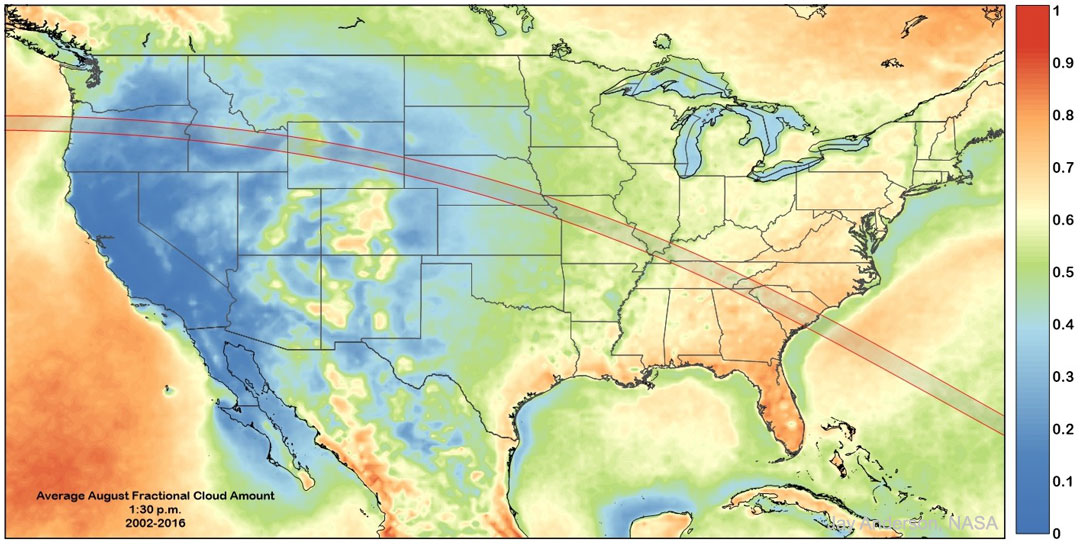
Are you planning to see the American Eclipse on August 21? A few hours after sunrise, a rare total eclipse of the Sun will be visible along a narrow path across the USA. Those only near the path will see a partial eclipse. Although some Americans live right in path of totality, surely many more will be able to get there after a well-planned drive. One problem with eclipses, though, is that clouds sometimes get in the way. To increase your clear-viewing odds, you might consult the featured map and find a convenient destination with a historically low chance (more blue) of thick clouds overhead during totality. Given the large fraction of Americans carrying camera-equipped smartphones, this American Eclipse may turn out to be the most photographed event in the history of the world. via NASA http://ift.tt/2jR3xiW

Monday, January 30, 2017

The Cats Eye Nebula from Hubble


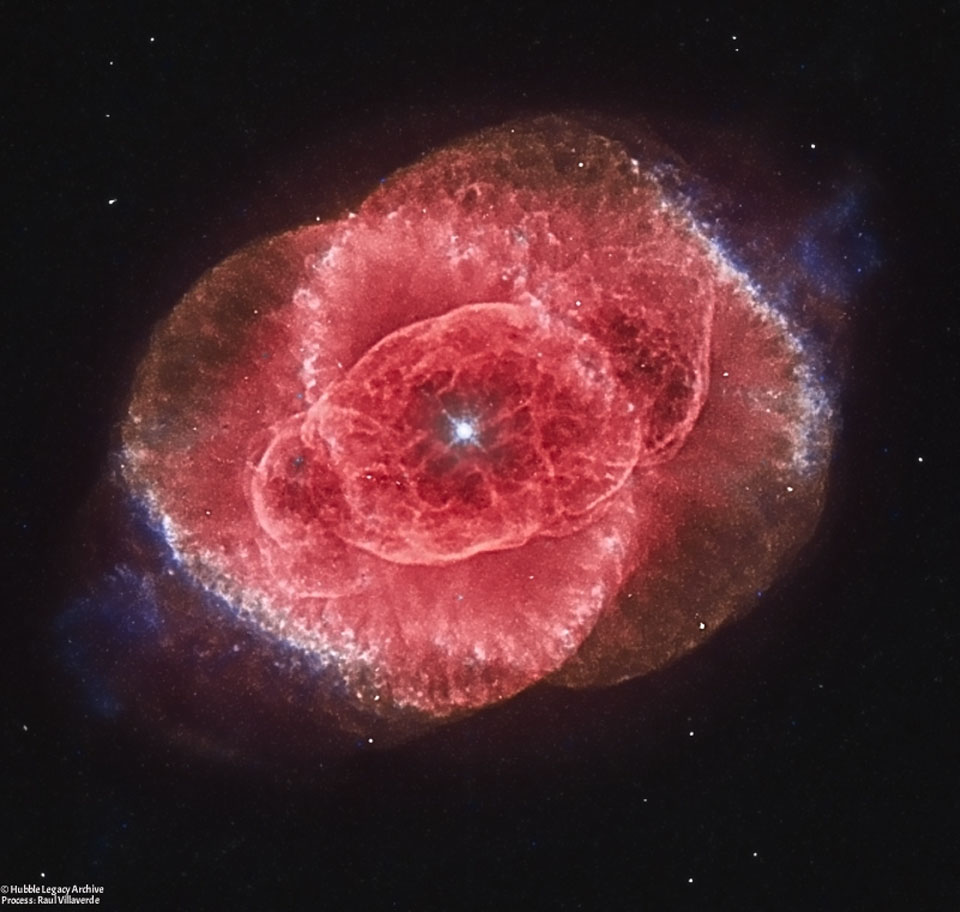
To some, it may look like a cat's eye. The alluring Cat's Eye nebula, however, lies three thousand light-years from Earth across interstellar space. A classic planetary nebula, the Cat's Eye (NGC 6543) represents a final, brief yet glorious phase in the life of a sun-like star. This nebula's dying central star may have produced the simple, outer pattern of dusty concentric shells by shrugging off outer layers in a series of regular convulsions. But the formation of the beautiful, more complex inner structures is not well understood. Seen so clearly in this digitally reprocessed Hubble Space Telescope image, the truly cosmic eye is over half a light-year across. Of course, gazing into this Cat's Eye, astronomers may well be seeing the fate of our sun, destined to enter its own planetary nebula phase of evolution ... in about 5 billion years. via NASA http://ift.tt/2jNBEYX

Tuesday, January 24, 2017

M78 and Orion Dust Reflections


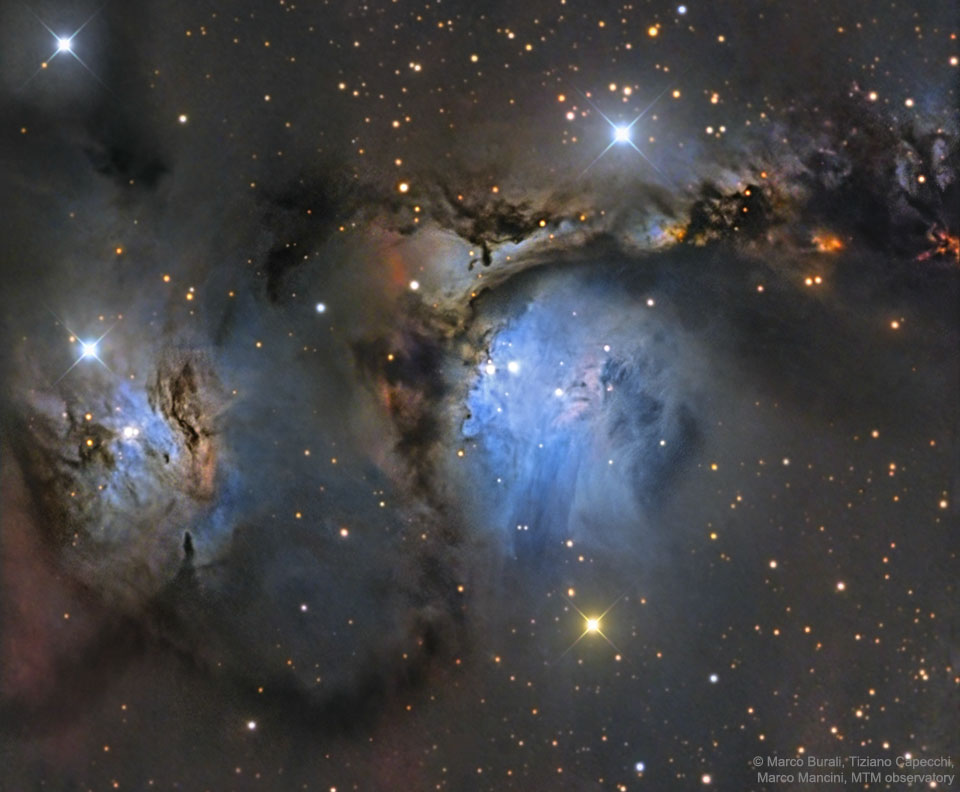
In the vast Orion Molecular Cloud complex, several bright blue nebulas are particularly apparent. Pictured here are two of the most prominent reflection nebulas - dust clouds lit by the reflecting light of bright embedded stars. The more famous nebula is M78, in the image center, cataloged over 200 years ago. To its left is the lesser known NGC 2071. Astronomers continue to study these reflection nebulas to better understand how interior stars form. The Orion complex lies about 1500 light-years distant, contains the Orion and Horsehead nebulas, and covers much of the constellation of Orion. via NASA http://ift.tt/2jV5RbE

Saturday, January 21, 2017

Daphnis the Wavemaker


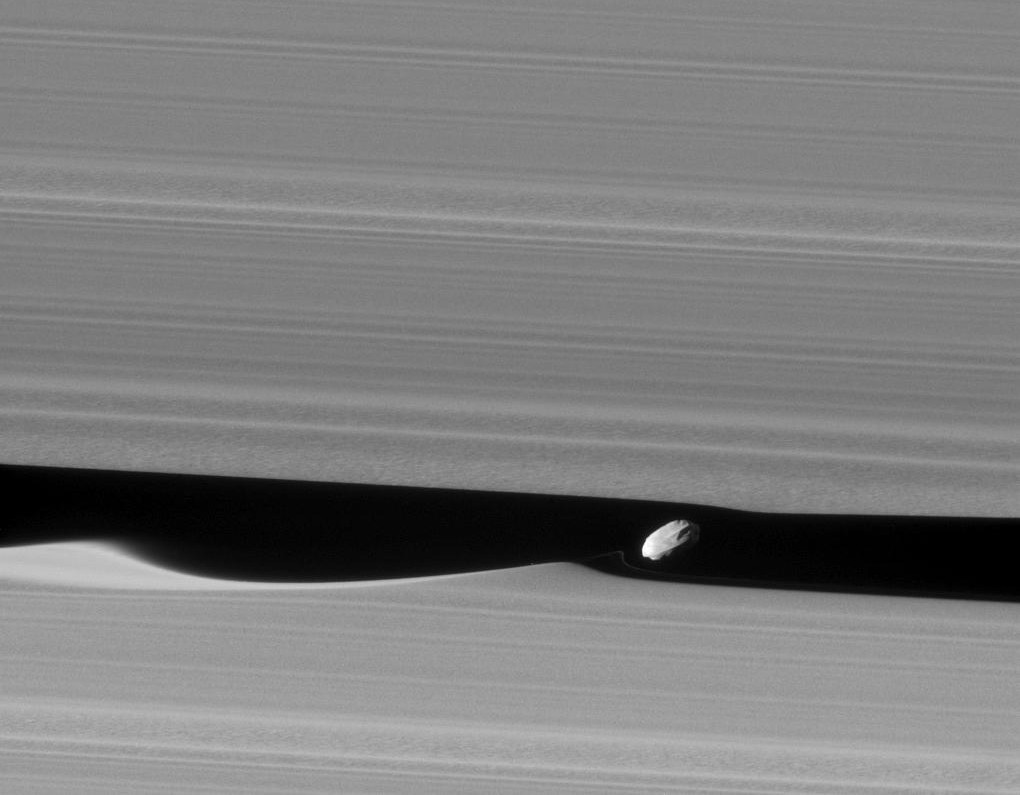
Plunging close to the outer edges of Saturn's rings, on January 16 the Cassini spacecraft captured this closest yet view of Daphnis. About 8 kilometers across and orbiting within the bright ring system's Keeler gap, the small moon is making waves. The 42-kilometer wide outer gap is foreshortened in the image by Cassini's viewing angle. Raised by the influenced of the small moon's weak gravity as it crosses the frame from left to right, the waves are formed in the ring material at the edge of the gap. A faint wave-like trace of ring material is just visible trailing close behind Daphnis. Remarkable details on Daphnis can also be seen, including a narrow ridge around its equator, likely an accumulation of particles from the ring. via NASA http://ift.tt/2jLs3VG

Wednesday, January 18, 2017

Space Station Vista: Planet and Galaxy


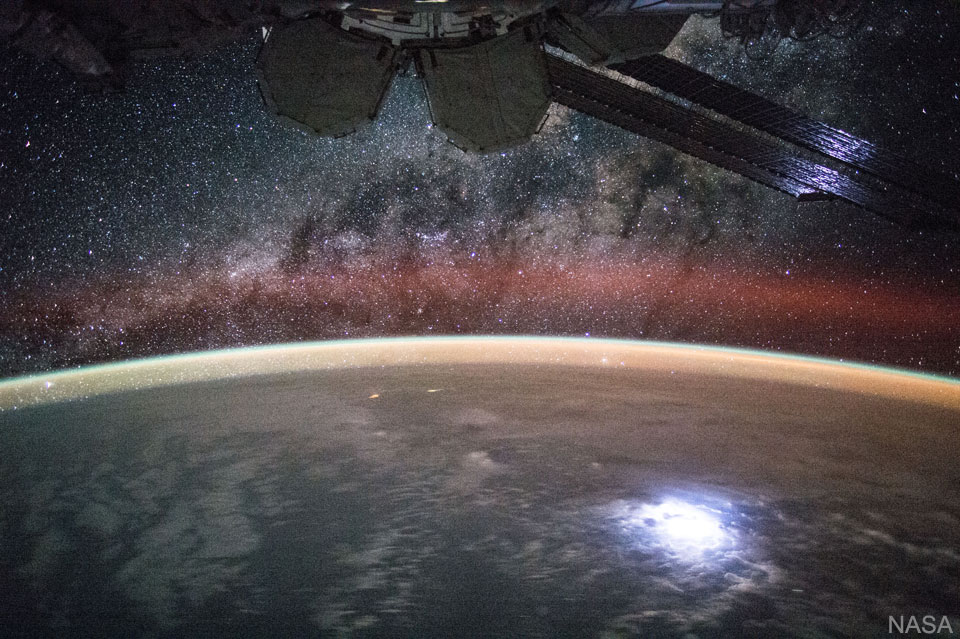
If you could circle the Earth aboard the International Space Station, what might you see? Some amazing vistas, one of which was captured in this breathtaking picture in mid-2015. First, visible at the top, are parts of the space station itself including solar panels. Just below the station is the band of our Milky Way Galaxy, glowing with the combined light of billions of stars, but dimmed in patches by filaments of dark dust. The band of red light just below the Milky Way is airglow -- Earth's atmosphere excited by the Sun and glowing in specific colors of light. Green airglow is visible below the red. Of course that's our Earth below its air, with the terminator between day and night visible near the horizon. As clouds speckle the planet, illumination from a bright lightning bolt is seen toward the lower right. Between work assignments, astronauts from all over the Earth have been enjoying vistas like this from the space station since the year 2000. via NASA http://ift.tt/2jKeh2S

Thursday, January 12, 2017

Edge On NGC 891


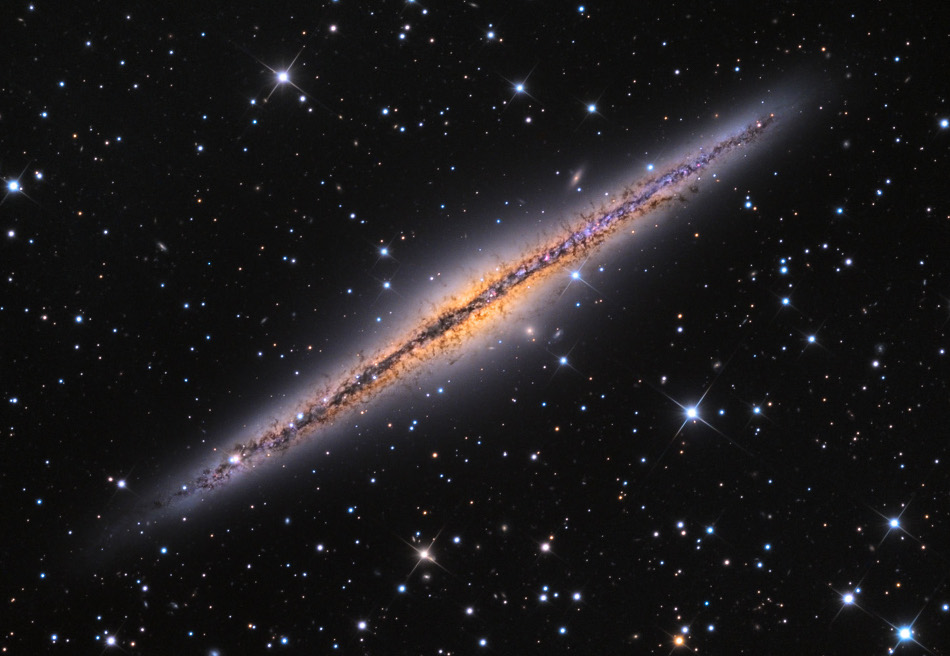
Large spiral galaxy NGC 891 spans about 100 thousand light-years and is seen almost exactly edge-on from our perspective. In fact, about 30 million light-years distant in the constellation Andromeda, NGC 891 looks a lot like our Milky Way. At first glance, it has a flat, thin, galactic disk of stars and a central bulge cut along the middle by regions of dark obscuring dust. But remarkably apparent in NGC 891's edge-on presentation are filaments of dust that extend hundreds of light-years above and below the center line. The dust has likely been blown out of the disk by supernova explosions or intense star formation activity. Fainter galaxies can also be seen near the edge-on disk in this deep portrait of NGC 891. (Editor's Note: The NGC 891 image used in today's APOD posting has been replaced and the credit corrected to indicate the author of the original work.) via NASA http://ift.tt/2jbfsv2

Monday, January 9, 2017

In the Center of Spiral Galaxy NGC 5033


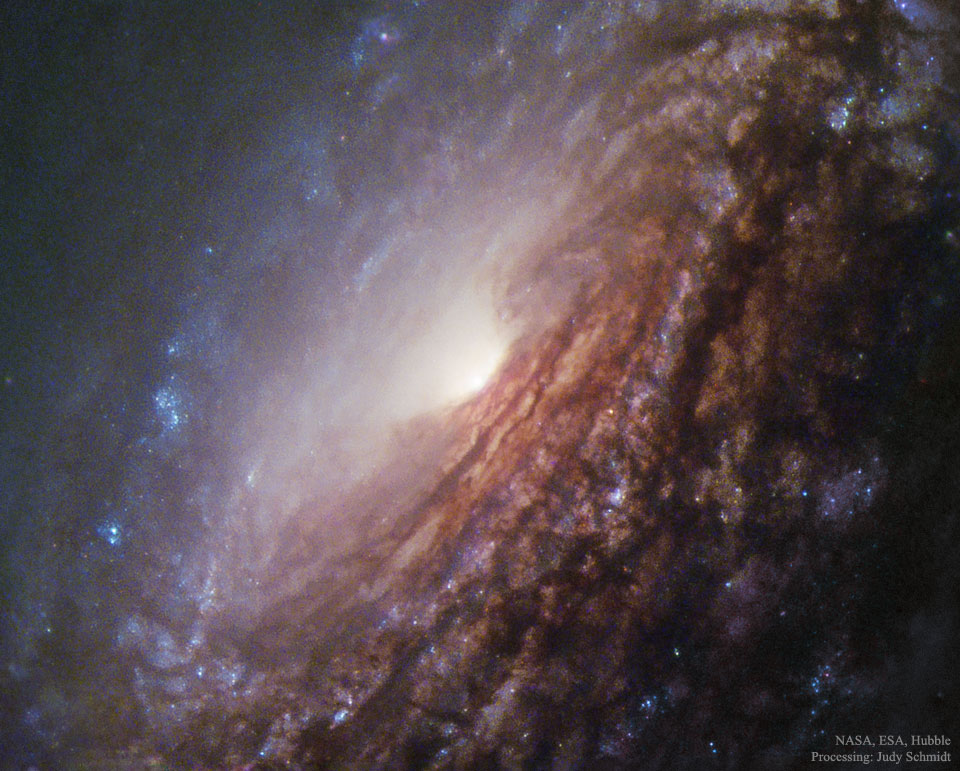
What's happening in the center of spiral NGC 5033? Many things -- some circular, some energetic, and some not well understood. NGC 5033 is known as a Seyfert galaxy because of the great activity seen in its nucleus. Bright stars, dark dust, and interstellar gas all swirl quickly around a galactic center that appears slightly offset from a supermassive black hole. This offset is thought to be the result of NGC 5033 merging with another galaxy sometime in the past billion years. The featured image was taken by the Hubble Space Telescope in 2005. NGC 5033 spans about 100,000 light years and is so far away that we see it only as it existed about 40 million years ago. via NASA http://ift.tt/2iVpWxX

Saturday, January 7, 2017

Sharpless 249 and the Jellyfish Nebula


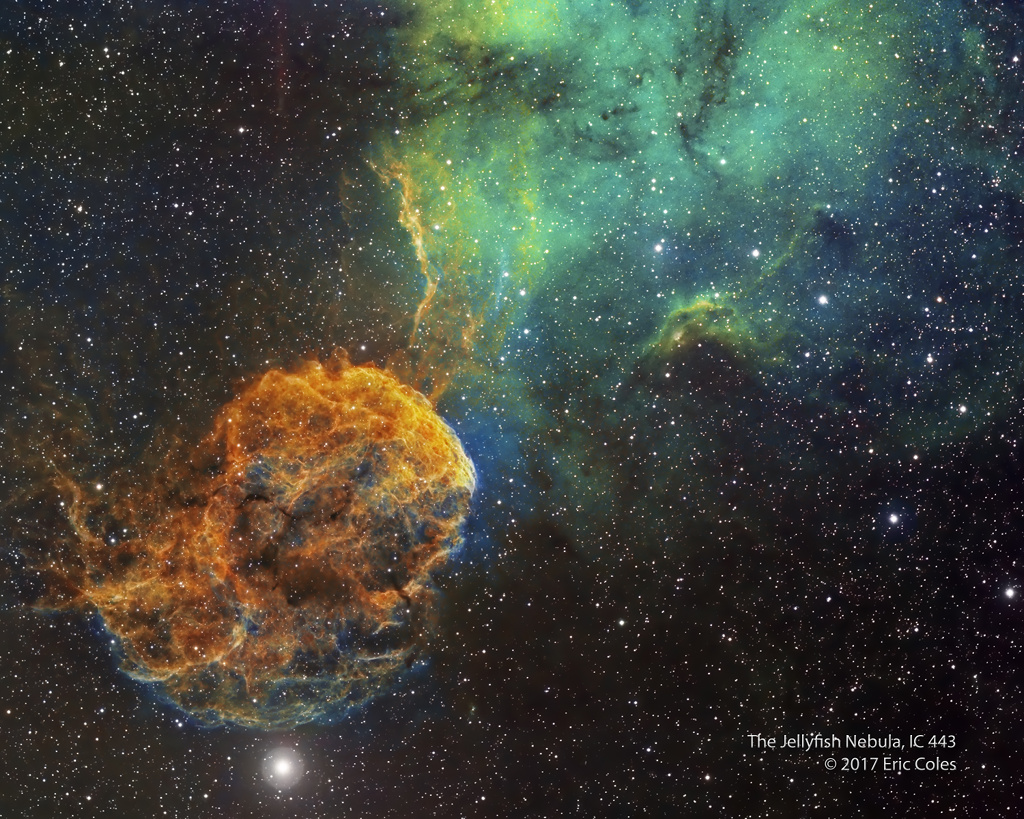
Normally faint and elusive, the Jellyfish Nebula is caught in this alluring telescopic mosaic. The scene is anchored below by bright star Eta Geminorum, at the foot of the celestial twin, while the Jellyfish Nebula is the brighter arcing ridge of emission with tentacles dangling below and left of center. In fact, the cosmic jellyfish is part of bubble-shaped supernova remnant IC 443, the expanding debris cloud from a massive star that exploded. Light from the explosion first reached planet Earth over 30,000 years ago. Like its cousin in astrophysical waters the Crab Nebula supernova remnant, the Jellyfish Nebula is known to harbor a neutron star, the remnant of the collapsed stellar core. An emission nebula cataloged as Sharpless 249 fills the field at the upper right. The Jellyfish Nebula is about 5,000 light-years away. At that distance, this narrowband composite image presented in the Hubble Palette would be about 300 light-years across. via NASA http://ift.tt/2iSR29l

Thursday, January 5, 2017

Peculiar Galaxies of Arp 273


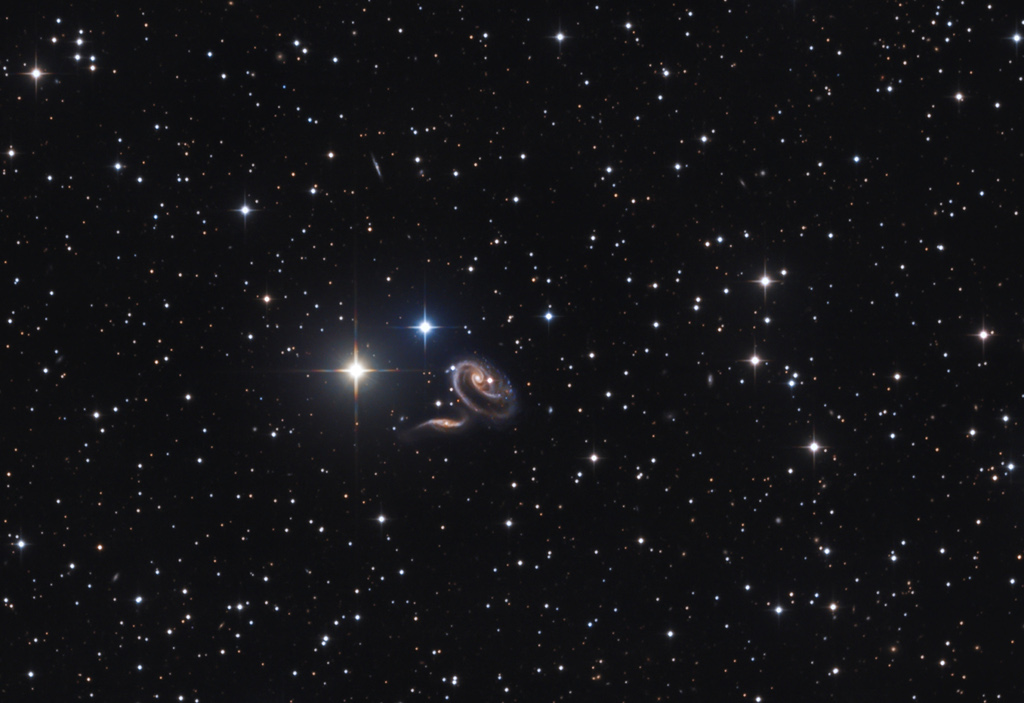
The spiky stars in the foreground of this sharp cosmic portrait are well within our own Milky Way Galaxy. The two eye-catching galaxies lie far beyond the Milky Way, at a distance of over 300 million light-years. Their distorted appearance is due to gravitational tides as the pair engage in close encounters. Cataloged as Arp 273 (also as UGC 1810), the galaxies do look peculiar, but interacting galaxies are now understood to be common in the universe. In fact, the nearby large spiral Andromeda Galaxy is known to be some 2 million light-years away and approaching the Milky Way. Arp 273 may offer an analog of their far future encounter. Repeated galaxy encounters on a cosmic timescale can ultimately result in a merger into a single galaxy of stars. From our perspective, the bright cores of the Arp 273 galaxies are separated by only a little over 100,000 light-years. via NASA http://ift.tt/2iLBdkw

Wednesday, January 4, 2017

Clouds of Andromeda


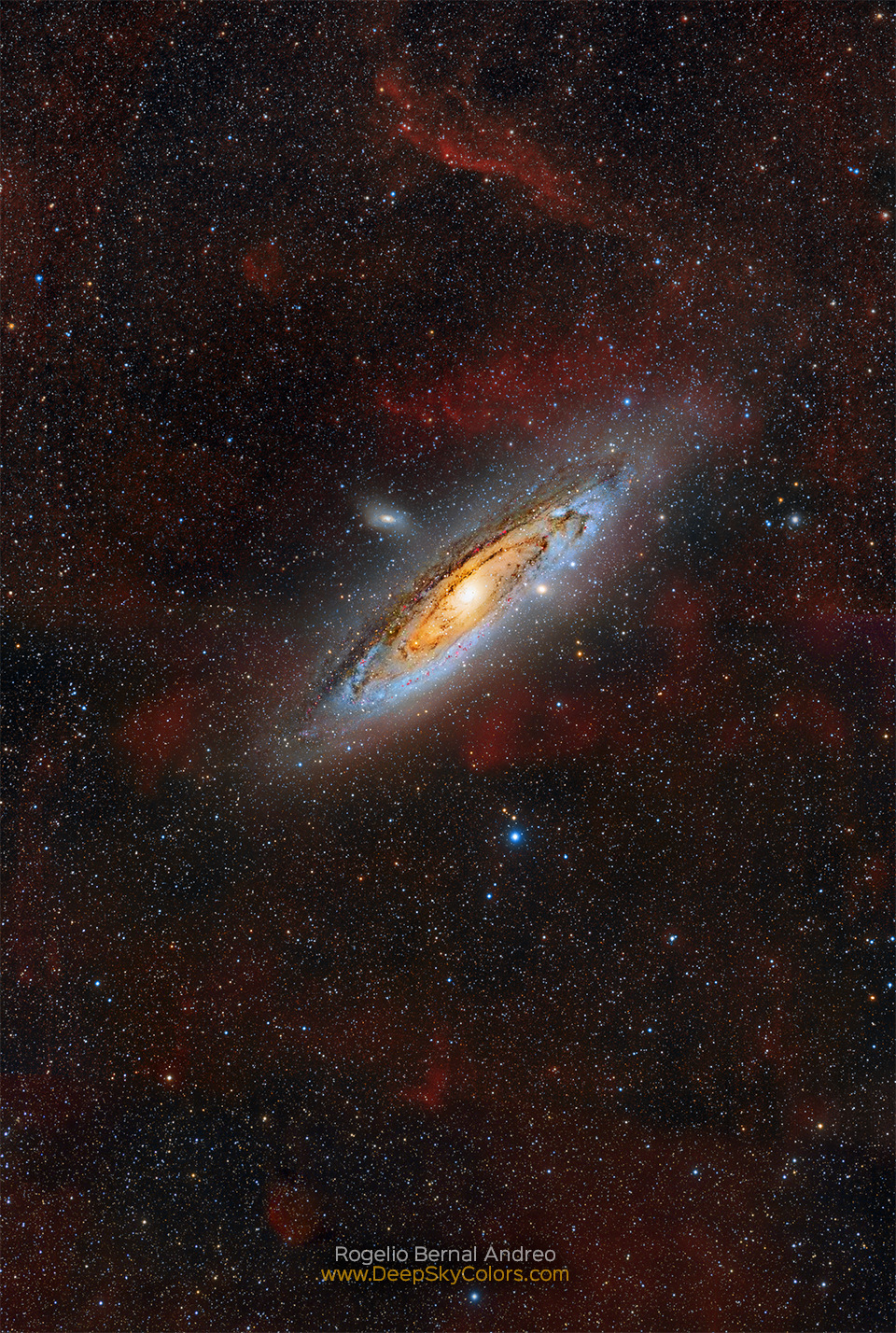
The beautiful Andromeda Galaxy is often imaged by planet Earth-based astronomers. Also known as M31, the nearest large spiral galaxy is a familiar sight with dark dust lanes, bright yellowish core, and spiral arms traced by blue starlight. A mosaic of well-exposed broad and narrow-band image data, this colorful, premier portrait of our neighboring island universe offers strikingly unfamiliar features though, faint reddish clouds of glowing ionized hydrogen gas in the same wide field of view. Still, the ionized hydrogen clouds likely lie in the foreground of the scene, well within our Milky Way Galaxy. They could be associated with the pervasive, dusty interstellar cirrus clouds scattered hundreds of light-years above our own galactic plane. If they were located at the 2.5 million light-year distance of the Andromeda Galaxy they would be enormous, since the Andromeda Galaxy itself is 200,000 or so light-years across. via NASA http://ift.tt/2ia5kyQ